During the past few weeks I have consumed a ridiculous amount of content on YouTube dealing with the impact of Mike Winger exposing a culture of cover up in the charismatic side of the Christianity pool.
In my last blog post I shared a bit about my own experiences in that environment. I’ve decided to refrain from sharing more of my story in public for now, because I hope that there is repentance in the hearts of those who have hurt me. I hope the scandalous domino effect of what Mike Winger did puts their feet to the fire and pulls their head out of the clouds.
What they actually do next is up to them.
When it comes to how I share my side of the clergy abuse story I lived, I am determined to land the plane in a way that honors Jesus.
In my forty-something years on this planet so far, I’ve learned that there is peace in the space exactly halfway between forgiveness and boundaries.
It can be way too easy to confuse turning the other cheek with letting yourself be a doormat.
Jesus was teaching how to stand your ground and maintain your dignity (by offering the second cheek) as a lesson for the Jews who followed him, who had a decent chance of already being slapped by the Romans occupying their home at the time when they heard this lesson.
Turning the other cheek is a form of nonviolent protest against oppression.
This same teaching has been weaponized in church culture to encourage people to be doormats.
Doormats tolerate and enable abusers, and lose themselves in the pursuit of a misguided concept of what purity requires of them at their expense (and for the benefit of their abusers). They forgive and overcome until they are entirely depleted and void of hope, having failed to overcome evil with good (by giving evil the silence and submission that it wants).
Doormats are running on an imbalanced equation. Enabling or empowering evil to continue isn’t good. Anyone protecting a predator isn’t acting in eternal love.
Overcoming evil with good requires confrontation. It requires the establishment and adherance to ancient standards of decency.
Complying to the popular judgment can be a betrayal against universal truth. Saying “this is wrong because it was always wrong, starting with (insert Psalm or Proverb here)” is uncomfortable, and also genuinely loving. The wounds of a friend are always better than the kisses of an enemy.
I say this with the authority of being a recovering doormat. Life is a journey.
At some point I learned that I need both forgiveness and boundaries to truly access peace.
There are many victims of this cover up culture who have been coming out of the dark since Mike Winger released his almost six hour expose of Shawn Bolz, (followed up a week later with another four hour video about a different abusive leader, Todd White).
This is the start of a new chapter in the movement. Whether leadership chooses to accept it, or fights it is up to them.
You can’t take back the stone after it is thrown, or the word after it is released.
There are more foxes in the hen house, and in due time they will be exposed, denounced, and removed. The Lord is behind this.
Exposure is the only way for anyone in this culture to get through the noise of now and into the nourishing light of actually obeying the commands of the Lord.
When it comes to what those commands are, that is a whole different post, but everything I believe about the situation comes from what I learned in a collection of 66 ancient books that somehow tell one cohesive narrative about a God who just wants his people to love him and love their neighbors (in a nutshell). He was serious when he said it the first time, in those books (the Bible). He is the same yesterday, today, and forever.
God hasn’t magically changed his mind because so many televangelists and hirelings have been teaching their flocks to hate their neighbors for decades. The church lost the plot. The plot never changed. Now the church has a chance to rediscover the original plot, and I’m hopeful that it will.
On January 17th, Christian YouTuber Mike Winger from The Bible Project uploaded a five hour and fifty minute video exposing Shawn Bolz for prophetic fraud and sexual abuse towards numerous former interns. He also exposed certain actions by leaders of Bethel Church and coined the phrase “Cover up culture”.
If you are not familiar with modern charismatic Christian culture, you probably have no idea what is going on, and that’s fine. I am familiar with it because I joined a local branch of that general umbrella network in 2018, a year after I miraculously survived a drive by shooting event as I was finishing my second book. That night impacted my life deeply. I put my ambitions to finish my zombie trilogy on hold and took numerous steps to get my life on a more consistent track.
I had a great time at first when I started going to that church. I joined a few small groups, volunteered at one of those family fun fair events, went to the mid week worship sessions, and attended a couple of conferences.
Things went south at the end of 2018, and got exponentially more drastic in the beginning of 2019, when I was dragged into a dynamic of spiritual abuse and bullying that stretched on for a long period of time. I’ve kept quiet about what I went through for more than half a decade. It all started when the lead preacher of the church shared from the stage that God would never use sickness to correct his children. A loving father wouldn’t give his child the flu as a form of punishment, so neither would God. I wrote him an email with several verses citing that God uses plague, famine, and the sword as tools of discipline throughout history. I shared this because the wormwood plague in Revelation which kills a third of all people was the same plague I wrote about in The Outbreak, back in 2016. This global pandemic I dreamed up ended up lining up in about a half dozen ways with the covid pandemic of 2020. From 2016 to March of 2020, I had no idea how much my stories would come to haunt me. The first act of my third book was written as a way to process that very particular stress while also rescuing the Han Solo of my trilogy (Reggie) at the same time.
Back to the sermon about God never using sickness as a form of judgment (what people in the biz call “the inciting event”). In my view, to teach the sheep that all sickness comes from the devil hit wrong, so I tried to share privately via email what I knew in a kind and respectful way. I tried to be gentle in my correction and add some praise and encouragement to soften the blow. My efforts did not work.
This pastor preached his first dig the next week. At first I assumed that several people had emailed him with a list of verses (which would happen in a healthy church environment). He didn’t name names, but he did say that anyone emailing him like that would be wasting their time. Then, over the course of 2019 and beyond this pastor demonstrated numerous times that he hated me specifically for existing in the first place.
I’m not going to tell the full story of what I went through now. I may go into it at some point, but I do at the very least want to share that I was once part of that group. I was sucked in, chewed up, and then spit out. I was bullied repeatedly by this leader from the pulpit on a regular basis and also ignored by other leaders every time I reached out for help. All that to say I know first hand what “cover up culture” does to people, and it is rotten and needs to be plucked out by the root.
People have been getting spiritually, mentally, emotionally, and/or sexually destroyed by what Jesus called “wolves in sheep’s clothing”, for a very long time. Instead of publicly confronting and casting out these wolves, the modern charismatic (and Catholic, and nondenominational) culture has rallied around the predators and restored them while skipping over the repentance and consequences of the restoration equation and ignoring the threat, damage, and trauma this self-proclaimed “culture of honor” imposes on their victims.
The norms of this system treat abusers as precious fragile broken angels who cannot handle the harshness of light or accountability. Their victims? They are labeled as accusers, gossips, and wretched faceless nobodies who aren’t worth the effort to love, or even respond to when they reach out for help.
I know this, because I lived this.
I accepted the judgment of this corrupt and self-serving groups of professional Christian shepherds, and I kept my outcast mouth shut for more than half a decade. I deferred to their authority.
Now I see from a better perspective, and I am adjusting accordingly. Now I see how not-alone I am, and how damaging this un-punishable culture of hirelings has been.
When Jesus talks about separating the sheep from the goats, his main point when talking to his followers is this: however you treat the least important members of your social structure is how you actually treat the son of God. “Whatsoever you do to the least of these, you have done unto me”. The modern charismatic leadership structure needs to go through a collective crash course on this verse.
The standard of radical and genuine love is something of a recurring theme in the Bible. Being a good neighbor, a good host to foreigners, and a good spouse are core values that would do wonders for how the outside world perceives Christians if those values were top prioroty now. Unfortunately the main values of church culture seem to be gaining and keeping power, worshiping money, and having as much political influence as possible. It is natural to value power, money, and influence. Jesus refers to those lures as thorns and thistles that choke off a spiritual stalk of grain before it has the chance to grow. To value love instead is the right goal, according to the ancient ways.
I’m still a Christian because I love the ancient texts and the standards that very few modern churches seem to consider. I love what Christianity is challenged to be, not what the culture that claims to be Christian presently is. Christian culture since the rise of televangelism is a philosophical embarrassment. It is the very epitome of the blind leading the blind right into a ditch. GK Chesterson said “The principles of Christianity have not been tried and found wanting. They have been found hard, and left untried.” That is the core of the problem, in my view.
When I learned that Mike Winger was speaking up about this core cultural rot and actually getting through to them, I was thrilled. His video has about 1.5 million views the last time I checked. Bethel church responded in interesting ways. The first Sunday night after the nearly six hour expose dropped, Kris Valloten (sp?), who was specifically confronted in the video, preached a stream-of-consciousness rebuttal that fell in line with old cover-up norms of old and landed with a wet thud on the ears of those both pro and anti Bethel who were tuning in. Bill Johnson ignored the issue entirely.
I like Bethel. I want them to be functional and consistent with their theology. They have the potential to get there, and they also have a lot of work ahead of them.
The next Sunday gave me a shot of hope. It involved two messages of genuine repentance from Dan Farrelly and Kris Valloten. Then a message from Bill Johnson which felt like at least a few steps in the right direction.
I’m cautious and hopeful that they will get through this. I don’t expect these guys to be perfect as they change gears and own up to decades of negligent norms. I do expect progress in each step they take after their public repentance. Follow through is necessary for their long term survival in this movement.
The Bible lays out the proper steps to take when dealing with abusive leaders. Going back to those ancient ways is the only real way forward for Bethel and other churches in that umbrella. Bethel seems to understand the assignment. Lets hope other churches also choose to step up to the plate and uproot the wolves that they have tolerated for far too long.
Mike Winger lit a fuse. Timely repentance will avoid blowing up the whole powderkeg in the wrong way. If these churches can do the work themselves, they will be ahead of the blast, instead of trying to pick up the pieces in the wake of the blast. The blast is coming either way.
The actual issue goes far beyond the sins of one abuser and directly challenges an entire system that would continuously protect abusers and harm their victims. If the system is willing to be dismantled, then there is hope. If the effort is to wait until attention spans go away, then there is no hope moving forward, and no integrity or authority for those who would rather stay the course of compromise than genuinely confront seats of compromised power.
What Bethel and others choose to do in the next few weeks will determine their destiny in the long run. The global church is now in a realm of “be real or be gone”. This phase of accountability has been a long time coming. It was also written about thousands of years ago in the Bible. That’s what all that “spotless bride of Christ” stuff was talking about.
There is a need for sincerity, honesty, and a sense that the shepherds at the top of this organization fundamentally understand that this situation is a matter of eternal importance.
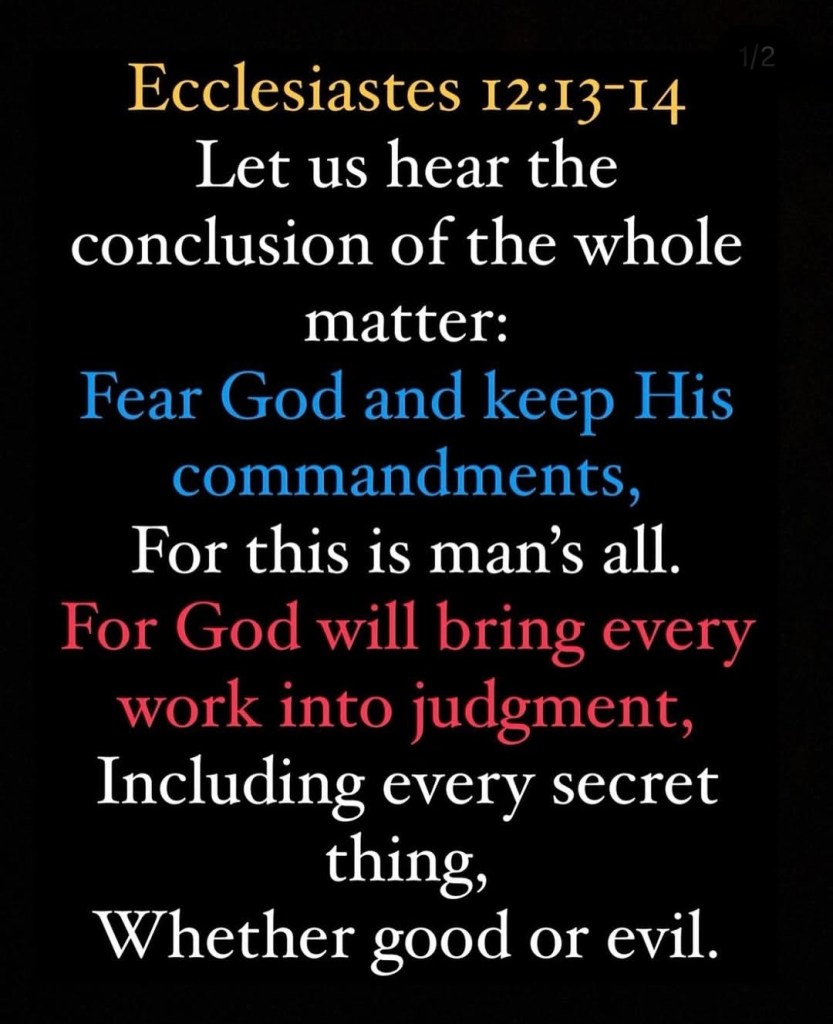
Nobody will fake their way into heaven. What is missing in the modern church is the fear of the Lord. We don’t have that right now. We have cover up culture and fleecing grifters being called faithful shepherds.
The old ways aren’t good enough anymore.
They never were.
The church and the world need new ways that are good enough. We need a social contract that protects victims and exposes predators. We need standards and norms that encourage humanizing neighbors, instead of trenches that get dug deeper and deeper by the year. We need to stop worshipping money and power and start validating wisdom and love.
When I wrote my most recent blog about the difference between peacekeepers and peacemakers on January 21st, I had no idea about the Mike Winger video. The theme I was discussing in that post matches what he did, though. He is an example of a peacemaker. Probably the loudest and most viral recent example available. I hope that he inspires the complacent to readjust their priorities and accept the Fear of the Lord as a natural ingredient to healthy faith instead of something that can be left out.
Why should the world outside the church be expected to take God seriously if the world inside the church can’t be bothered?
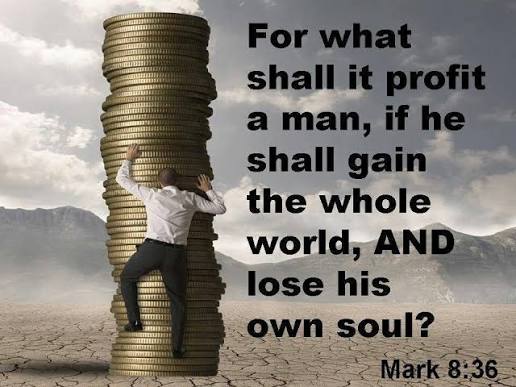
Every life is a wildflower that blossoms and withers within a single year of the span of infinity. Jesus once asked, “what does it profit a man if he gains the whole world and yet forfeits his soul?” The time has come for those at the top of the pile to take that question seriously.
There are more skeletons in the closet with Bethel and other churches in the network. It will take time to uproot and process. Pastor Dan said “you can’t have microwave solutions to crock pot problems” a couple of weeks ago. That is true, but it is also important for there to be a sense of urgency in leadership at Bethel and throughout the network, because a lot of victims have waited a long time to have the chance to share their side of the story.
I’d rather deal with a messy church that is working consistently to be pure than a picture perfect church that is rotten at the core. Jesus referred to those leaders and environments as white washed tombs filled with the bones of the dead. Gross. No thank you.
Peacekeepers protect the status quo. They defend established powers. They side with abusers. They blame victims.
Peacemakers challenge the status quo. They defy established powers. They stand up against abusers. They empower and protect victims.
Peacekeepers hide in consent and compliance, regardless of whether the system they protect is just or not. They do not rock the boat. They seek to silence and suppress any who do rock the boat because the boat represents their sense of connection to peace. Peacekeepers care first about their peace, and often do not consider or value the peace of society at large.
Peacemakers refuse consent and compliance with unjust systems. They will rock the boat when that action is necessary. They understand that a system is not their source of peace or security. Connections between human beings are the source of genuine peace. The well being of everyone is the nature of genuine peace. Peacemakers are willing to sacrifice their own peace and hornlock with the forces of chaos and injustice to obtain the ultimate goal of making peace where peace does not presently exist.
Peacekeepers say, “Peace! Peace!” When there is no peace.
Peacemakers do not lie about what peace is or what peace should be, or who has the right to have peace at the expense of others. Peacemakers make peace when there is no peace. They do not ask. They insist.
Jesus of Nazareth wasn’t a peacekeeper. He was a peacemaker. He didn’t say, “blessed are the peacekeepers”. He said, “blessed are the peacemakers”. Two different words. Two different motives. Two different goals.
The world needs more peacemakers and less peacekeepers. Thankfully people have the ability to change their minds, to change their ways, and to abandon peacekeeping to become peacemakers. The question is whether or not you are up to the challenge.
On January 7th, in Minneapolis a woman named Renee Good was shot in the face by an ICE agent. The discussion about whether or not that shooting was an act of self-defense by the agent, or a cold-blooded murder has been the main debate of the two main political trenches in America ever since. There were numerous citizens (and agents) recording the event as it happened. The shooter himself had his phone recording in one hand and his gun in the other when he took her life. The idea that there can even be two sides to an argument about this incident in the first place is baffling to me, and yet here we all are. People on the right prefer the passenger side camera angle of the shooting, because it can appear that the agent was in danger of being hit by Mrs. Good’s car. People on the left focus on the driver’s side perspective, which shows her turning away from the agents and explicitly not trying to drive through them. She was trying to escape. She was in danger, and now she is dead. One agent tried to reach into her SUV, and another pulled his gun out before she even moved the vehicle. And now she is dead.
The video taken by the agent who pulled the trigger in the first place is the most damning of all the angles shown, because you see him switch his phone from his right hand to his left before walking to the front of the vehicle and shooting the driver maybe ten seconds later. He circles her car like a shark. Her last words were to the agent who killed her. She said, “It’s ok, I’m not mad at you.” This was twenty seconds before she was shot in the face. The shooter called her a, “F&*$%ing B#%$” seconds after he shot. Certain news outlets edited out that part, because it didn’t help their narrative of him being an American hero just doing his job.
The agents did not rush to the scene to offer medical assistance. They actually kept a bystander who was trained in medicine from approaching the vehicle and offering help. They blocked the ambulance. Everything about this is wrong.
Certain right wing news outlets and influencers claimed that she hit at least one agent who was sent to the hospital. That is a lie. The shooter fled the scene. None of the ICE agents were hospitalized. Those are the facts, but in this world of politically charged algorithms, selective coverage, and opinions pretending to be news, facts are seen as old fashioned. The concept of an objective truth is being phased out because it threatens the foundations of ideologies. (This will only get worse as AI improves and crosses the uncanny valley to create videos and voices that become indistinguishable from recorded evidence. We are very close to that threshold now.)
People assume I’m MAGA because of my skin, gender, and my faith. Nothing could be further from the truth. When I was younger, I was very politically charged and very loud in sharing my opinions and observations in that realm. I am a straight white redneck Christian liberal man who has witnessed the Christian right devolve into the beast it is today for my entire adult life. I saw the writing on the wall starting in the year 2000 and I poured a lot of time and energy into learning what I could from the Bible and history. I wrote warnings and reminders to conservative family and friends, or strangers online during the wild west of the internet. As a young man, I poured countless hours into pointing out certain scriptures about loving your enemy and overcoming evil with good. I sounded the alarm and stood on my soapbox and preached to people who had stiff necks and hard hearts and itching ears that don’t endure sound doctrine. People who see me as a nuisance and take pride in how much they do not care.
Now, I still hold my beliefs (pro-Christ, pro-worker, anti-fascist), but in the past few years I have worked to tone down in sharing what those beliefs are. I wrote my first two books to be as close to politically neutral as I could make them. I wanted both liberals and conservatives to see President Adam Chambers as a man for the people, who was concerned with rooting out corruption in Washington and making hard decisions that stood to benefit the people in his country, whether they voted for him, or against him. My third book took a hard left turn. I revised that book last year because it crossed the line between storytelling and soapboxing.
Now I’ve taken the soapbox out of the story, and I guess this is as good a place as any for me to set it up. Even if I’m talking into a void, there are things I need to get off my chest.
I didn’t want to make this blog political, but circumstances are forcing my hand. There is way too much wrong with Donald Trump’s America, and while I may only have a handful of subscribers and three weird campy nerd fantasy novels under my belt as a platform, I will not stay silent moving forward. I will share what I see. Who knows how frequently I will post this year? My main goal as stated in my last post is to challenge the comfort zone and shift gears. I’ve written three versions of this post before sharing it. I have another two posts I’ve been working on which will come out soon. My challenge as a left wing Christian is to honor the command to love my enemies. The Bible says that love should be genuine, hate what is evil and cling to what is good. I hate MAGA. I hate Donald Trump and how he has hijacked the right wing and is using the office of president as a means to enrich himself, get revenge on his enemies, and set the entire world on fire. I’m tempted to scream and cuss and attack at full speed, but what I want is to communicate. We’ll see if I can pull it off.
Hello again, internet. It’s been a minute. One of my New Years resolutions is to actually use this blog more frequently. Next month marks the tenth anniversary of when I started writing the first book of The Resistance is Dead trilogy. That’s hard to believe. When I was a kid, I remember numerous grownups telling me how much time flies when you become an adult. The longer we stick around, the faster the years zip on by. In a way, that is true, but I have a theory that time flies mostly because we settle into comfort zones and our brains try to abide by routines and run on autopilot mode as much as possible, because autopilot mode is efficient. But autopilot mode is a thief of experience and growth and learning. I am just as guilty as anyone when it comes to operating within the autopilot comfort zone more often that I would prefer. But I’m also working consistently on challenging that autopilot mode and leaving the comfort zone.
I say all that to confess that the whole process of trying to be a successful independent author is contradictory to my personal preferences for privacy and anonymity. I am a showboat trapped in the body of an introvert. It all started in high school when I found my tribe with the theater kids. I was in three plays. In the first play I sang about being in love with a girl named Fred doing Once Upon a Mattress while wearing blue tights in front of a lot of classmates and parents. I was equal parts terrified and exhilarated.
I also played Jonny the Zombie with a broken heart in Zombie Prom as a senior in high school. (fun fact: I absolutely called back on that experience when fleshing out the perspective of Adam Chambers in President Zombie and beyond.)
I learned back then that just because something scares me, doesn’t mean I should avoid it. Fear can be helpful, but it can also be a gatekeeper to block all sorts of experiences if you let it have the final word.
When it comes to the books, I am running a free promo for The Outbreak for five days on Kindle starting January 5th (last day is the 9th). I’m also working on a fourth book to be published by the fall of this year to celebrate the tenth anniversary of The Outbreak.
I published a revision for Death is Not the End last year, mostly in response to a negative review about me soapboxing that confirmed some discomfort I already had about the book and the question of how far too far really was. I cut out three chapters and did a general polish of the story. The story is better now, and I am genuinely happy to stand behind it. The deleted chapters involved my worries about the potential rise of fascism in the modern era, and a couple of chapters about my religious views and experiences. I don’t regret publishing the book in the original state, but I also felt very uncomfortable promoting the book, so the negative review was permission for me to dial it back. Now I feel much more comfortable as an introvert who enjoys privacy in promoting it.
If I could change anything about my journey over the past ten years with telling stories, I would have published under a pen name. Anonymity would have given me a shield against overthinking every opinion I share or want to share. But I didn’t do that. It is what it is. There is no reset button in real life, but there are plenty of opportunities to learn, process, and choose different branches as we move forward. I genuinely stand by my stories, weird as they are, and I plan to keep writing new fun, slightly disturbing, hopefully somewhat philosophical and also entertaining stories for as many laps around the sun as I’ve got left in me.
I’m learning how to navigate and properly focus my daily allotment of energy.
I’d like to do a series of posts reflecting on some of my Escapist articles and my experience with them. I’d also like to share a few different fan theories similar to the articles I wrote. I’ve got a fairly decent backlog of ideas and subjects to explore, but until now I’ve been focusing my energy elsewhere.
This year, I’m coming out of the shell.
During the past year and a half I’ve gone through a number of big changes and challenges, which made going into the shell necessary. Now my batteries are recharged, the dust has settled, and I aim to challenge my established routine of staying quiet and not posting on this blog, starting now.
Happy New Year, internet. Let’s make this a good one.
A couple of weeks ago, I enrolled my second novel in a marketing promo at Freebooksy. As it turned out, President Joe Biden announced that he was dropping out of the 2024 race the day before that promo launched.
The next day, my book jumped to the very top of the Contemporary Fantasy and Conspiracy Thrillers list, and hit #2 on Horror Suspense. The book stayed in the top ten from Monday to Friday. Both of my other books saw a lift in sales as well from the promo, with Book 1 peaking at #84 in the Conspiracy Thrillers top 100 paid list.
Writing novels is a long term situation. A writer could spend years wondering if they are wasting their time or not between writing a story and getting positive feedback. Moments like these are rare, and very valuable to independent authors like me. I am thrilled to have gained some new readers, and very pleased to report the success of my promo campaign.
For the first six Star Wars films, there is some confusion about how to watch them “properly”. Some people believe that they should be seen in episodic order, others believe they should be seen in the order they were released. Both of these approaches have different issues when it comes to the way the story unfolds. If you watch in episodic order, the plot twists of the original trilogy get spoiled long before they are revealed. If you watch them in release order the last film ends on a very down note with thousands of Jedi being massacred, the hero falling to the dark side and the galactic empire rising up from the ashes of the republic.
Then there is the “machete order”, a third option that cuts episode 1 out entirely and sandwiches episodes 2 and 3 between 5 and 6. The reason this order exists is because a fan hated Jar Jar Binks so much that he decided to act as if The Phantom Menace didn’t exist. Full disclosure, I used to be on the Jar Jar hate train. The first Star Wars article I wrote was a review of a mashup of the prequel trilogy that took five minutes from Phantom Menace and just over an hour of scenes and deleted scenes from Attack of the Clones and Revenge of the Sith to essentially focus in on the Anakin and Padme love story, minimize cringe moments, maximize time together (through deleted scenes) and make the chemistry between the two characters flow better.
I have changed since writing that article. First of all, I think the prequel trilogy as it stands is pretty great. Does it have some issues? Of course, but the pros far outweigh the cons in my opinion. I also like the sequel trilogy (mostly). I’m one of those geek fans who prefers to focus on what I enjoy instead of complaining about what I don’t like. I’ve been swept up with the crowd a few times over the years. I took a few digs at Jar Jar when I was more interested in being accepted by readers at the Escapist than being a kind human being. The “Darth Jar Jar” theory opened my eyes quite a bit, plus I learned that Ahmed Best almost committed suicide thanks to the venemous hatred of the Star Wars fan base, and that’s just not ok in any galaxy.
The end result of this personal journey is that I have come to love The Phantom Menace and would like to offer up an alternative to the Machete Order that doesn’t omit an entire film, and actually enhances the series when viewed from this angle.
May I present to you “Star Wars: Yin Yang Order”. This is, in my opinion, the ideal way to view the first six episodes of the saga. It takes both trilogies and scrambles them together a bit. This viewing order reminds me of the way a yin yang isn’t just a circle with a white side and a black side that has a straight line dividing them (which is what you get with both release order and episodic order). The first half is the “Light father” trilogy (IV, I, V), and the second is the “Dark father” trilogy (II, III, VI).
When George Lucas was first hashing out the saga, he made Darth Vadar and Anakin Skywalker as two separate characters. He referred to Vadar as the “dark father” and Anakin as the “light father”. This order enhances that sense of duality.
The Light Father trilogy starts with the first Star Wars film ever made, which introduces many of the characters, as well as the concept of the force itself. It presents Anakin Skywalker as a hero of the clone wars, and there is no reason to believe otherwise. Following up with Episode 1 maintains that illusion while also diving deeper into the world. It introduces more characters while presenting others in a different context. For example, Obi Wan dies as an old man in Episode IV, and in Episode I he is shown as a very young man who sees his own mentor die in a lightsaber battle, and then avenges him and kills a Sith Lord. A New Hope introduces the galactic empire and the rebellion against it. The Phantom Menace introduces the galactic republic in a state of relative peace. Seeing the two films side by side is jarring and raises a number of questions. It also shows how Luke was following in his father’s footsteps because both films end with a skywalker flying a small fighter and blowing up a mothership of some kind to save the day.
The Light Father trilogy ends with episode V. Now padded with a richer backstory, it continues the story of Luke and shows him training under Yoda to be a Jedi. Both Yoda and Darth Sidious were introduced in Episode I, so seeing them appear in V is more like a reunion than an introduction. However, the twist of Vadar being Luke’s father hits much harder this way, since there has already been a film featuring Anakin Skywalker as a “good guy”. Also, as it just so happens, in these three films both Skywalkers wear light colored clothes.
Moving on to the Dark Father trilogy, this is where you see both Anakin and Luke wearing black. By this point, viewers are deep into the world and the story and have some immediate questions about the dark side, how Anakin became Vadar, and what will happen to Luke. Starting with Episode 2, this next trilogy begins to answer some of those questions. It shows an older Anakin who is much closer to Luke’s age. He has been in Jedi training for ten years and is powerful in the force, but also arrogant and emotional. You watch him start to slip into the dark side. It starts with a disrespectful comment to Obi Wan, and before you know it, he’s decapitating Sand People men, women, and children off camera. The mirroring between Luke and Anakin continues with Anakin losing an arm at the end of Episode II, similar to how Luke lost his hand at the end of the last film in this order. But this time, the mirroring isn’t like it was with the Skywalkers blowing up ships with their little fighter craft and R2D2 helping. No, now the mirrors are unsettling. Especially for people who are watching for the first time and somehow don’t know the plots of the films or how the story ends. Attack of the Clones also has an image of a yin yang in clouds at the exact halfway point of the film, which is cool.
Episode 3 is the middle of the trilogy. This is that film where the bad guys win. One of the few films where that happens. The only other blockbuster franchise that I can think of where the bad guys win would be TheGodfather series, which doesn’t really have any “good” guys. Just bad guys you root for, and bad guys you don’t. Even slasher films have some person who represents the forces of good and “kills” the bad guy at the end of the movie. Not RevengeoftheSith. That film goes all in. It may end with that hopeful Luke Skywalker music theme and the twin sunset on Tatooine, but that doesn’t change anything about what happens. The galactic government has been destroyed and taken over by space Hitler, all the heroes have either died, turned into villains, or gone into exile, and there is nothing anyone can do about any of it.
In the three-act structure of storytelling a lot of times the second act ends on a cliffhanger, and then the third act resolves the conflict and brings victory to the heroes. That’s what “feels” right to the audience. The final film in this order is ReturnoftheJedi. Having this back-to-back with RevengeoftheSith gives context to the arrogance of Palpatine. It’s also disturbing to see Luke Skywalker wearing all black and force choking the guards at Jabba’s palace in the first fifteen minutes or so. Darth Vadar is seen as both a tragic figure and a child-murdering monster. The tension of the throne room confrontation between father and son and the temptation of the emperor has a lot more gravity to it. And when Vadar saves Luke at the end he is not only helping his son, but also atoning for his own sins.
So, there you have it, friends, family members, and fellow Star Wars geeks. The “Yin Yang” order, which has a little darkness in the light father trilogy and a little light in the dark father trilogy. It starts with A New Hope and ends with the ReturnoftheJedi, it maintains the order of plot twists with the one exception of Master Yoda being introduced in PhantomMenace first instead of Empire (but even that works better this way, in my opinion). Having watched the series in this order recently, I can say that this is the most satisfying way to experience one of my favorite stories set a long time ago in a galaxy far, far away.
In this blog I’m going to talk about different aspects of my book series. I would like to minimize spoilers for anyone who hasn’t read them yet, but I can’t make any promises. I will pick certain themes and subjects to explore in-depth for the benefit of providing bonus content to those of you who have already read the trilogy, while hopefully convincing those on the fence.
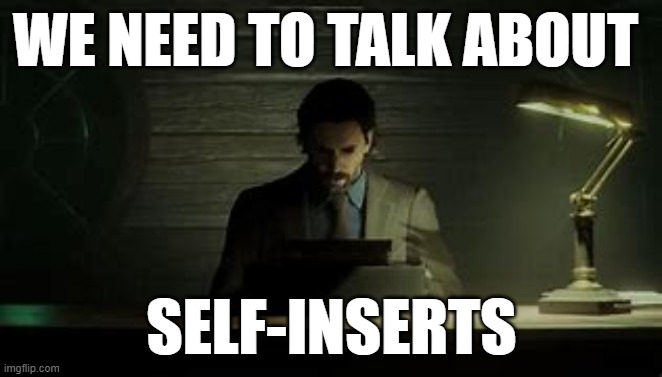
Today I’d like to talk about my decision to do a “self-insert” in my series. In case you didn’t already know, a self-insert is when the writer of a book, play, movie, or video game writes themselves into the plot of their story. There are two different kinds of self inserts. I’ll refer to one as a vague self-insert, and the other as a direct self-insert.
Vague self-inserts are fairly common. Those are characters with their own name, and back story, who have traits of the author and who the author chooses to relate to in telling their story. Those are usually safe and inoffensive to the general rules of fiction writing.
Direct self-inserts, on the other hand, are rare, and usually a bad idea. Pulling one off is a challenge that most reasonable storytellers choose to avoid. When a writer does a direct self-insert, they conjure a character named after themselves, based on themselves, to interact with a world that came from their imagination. It can get very messy very quickly, and it can really interfere with the suspension of disbelief. If it is done well, it can be an effective tool, but it is certainly a tricky thing to pull off.
Before I get into my own stories, I’d like to explore some different examples of self-inserts that I have encountered in pop culture, starting with one of my favorite authors: Stephen King. I was introduced to him way too young, in the fourth grade. This was about two years after my dad died of cancer, and three years after I lost my baby brother to SIDS. In school an older kid named Tim gave me a copy of It one day and I was immediately hooked. I related to the Stuttering Bill character, because his parents were traumatized and disconnected as a result of the death of his younger brother. I knew exactly what that felt like.
Ironically Stuttering Bill ended up writing horror fiction, just like me, and just like Stephen King. In fact, when it comes to vague self-inserts, Stephen King is a repeat offender. In story after story one of the main characters is a novelist, or aspiring novelist. Most often they live in Maine. Bill Denbrough in It, Jack Torrence in The Shining, that poor, poor soul in Misery. The list goes on and on.
After decades of telling stories, Stephen King decided to up the ante and go for a direct self-insert midway through the sixth book of his Dark Tower series. That was the first time I was introduced to the concept. I remember being absolutely flabbergasted when I read the part where Stephen King, the author, gets saved by his characters from a car accident that actually almost killed him in this world. I remember when I got to that part, I slapped the book shut, and just sat there in shock for a few moments. I’d never seen or heard of anyone doing that before (although it has been done before, numerous times, by numerous creatives. Wes Craven, for example, did it almost a decade earlier in his film Wes Craven’s New Nightmare). It felt like the very rules of fiction were being put in a blender, and I loved it.
The next time I encountered that perspective was in the game Alan Wake. The plot of the game is a writer who is living out the events of a book he wrote in a week. The problem is, he has no memory of writing that book. His wife is also missing and the whole thing plays out the idea of a story-within-a-story on a masterful level. You find pages of the manuscript along the way, and then play through the scenes described in those pages a few minutes later. The interesting thing about Alan Wake is the way the game’s writer Sam Lake uses Alan himself as a self-insert. This is like Inception levels of storytelling, and I’m all for it. Alan Wake writes himself into his own story in the game, while Sam Lake based Alan off of his own experiences with writing in games. The fictional crime series that the character Wake had recently finished writing was a reflection of the Max Payne action crime games written by Sam Lake. The struggles of starting something new that the character Alan Wake deals with in-game reflects similar feelings the writer had about the time between the first game series and the creation of the Alan Wake game. There are a few interviews where Sam Lake describes his process with that project. Once you see it, it becomes hard to unsee.
Getting back to my series, I started off with a vague self-insert through the character Patrick Mills. He was mostly based on me, at least at first. It helped me to feel more grounded in that world. I was a regular freelancer at Escapist Magazine when I started that first book. I had already encountered a few people in real life who had read articles that I’d written. I wasn’t famous by any stretch, but I had a platform where I was paid to geek out. I also had a day job. Patrick Mills was a zombie geek with a small platform through his YouTube channel who also had a day job. The Reggie character was inspired by my friend of the same name, and if I hadn’t already chosen to include him in the story, I most likely would not have had the guts to do the same to myself in book 3.
In just a couple of chapters both Patrick and Reggie veered away from their respective sources of inspiration and became their own characters. This is how it should be, I think. Characters should have a life of their own. They should make choices or mistakes that surprise you. They should not fit nice and neat into a box of personality, because real people don’t usually fit nice and neat in any box either. Life is messy, and that is part of what makes it beautiful.
When I went a step further with my own direct self-insert in the last book, as soon as I plugged a character based directly off of me into that world, he started to veer away from the source material and become his own character. Because he was in a different situation with different choices and surroundings. As an introvert, I’m still not exactly comfortable having a book with a character based off of me blabbing his mouth about different stories I never thought I’d share with the general reading public on that level. My own discomfort combined with the obvious discomfort of my direct self-insert character made the concept seem workable to me. It felt like the opposite of a “Mary Sue” character, who is usually a self-insert character without any personal flaws or shortcomings or growth arc (In other words, boring!) My character felt more like a Sad Sam or a Bad-Luck Buck than a Mary Sue. If it felt like a Mary Sue to me, I would have trashed the document and started the story from a different angle.
In my journey so far, every now and then a story idea pops up in my head about a situation and my immediate reaction is, “Oh no, that would be terrible…I love it!” Something about the tension of certain situations that draws the imagination into a fun and messy place where good stories happen. After four years of writer’s block, and considering how weird things have been on our side of reality, jumping the shark and going for a full direct self-insert was the spark that broke my writer’s block and led to a novel that is forty pages shorter than my first two books put together, and brings what I feel (and I hope you agree) to be a satisfying conclusion to a story that was left in limbo for four years.
I’m running a Kindle Countdown deal for my book trilogy this week and doing a promotion for book 1: The Outbreak for $2.99. (You can get book 2 for $3.99 and book 3 for $4.99). Getting ready for this has sent me down memory lane. It brought me back to where I was when the story began to take shape. This blog post does have mild spoilers for certain story elements of the trilogy. If you haven’t read the books yet and want to be surprised, consider yourself warned.
I was hanging out with some friends on my birthday. We were talking about ideas for games, and I had an idea for a zombie video game where you play as the zombie, but there is a karma system similar to Fallout, so you can choose to be a monster or a hero that only looks like a monster. You grow in strength over time until you are able to control an entire horde of zombies, and it is up to you whether to use your abilities to target innocent survivors or gangs of raiders. Looking back, it was one of those brainstorming moments where an idea comes out of nowhere, pretty much fully formed. I ended up using 90% of that original idea in my series. The one thing I didn’t include was the ability to use a group of zombies to form a make-shift ladder of bodies that the main zombie climbs to get from A to B. If I ever write a fourth book in the series, I will make sure to include the zombie ladder.
The idea of a reverse-Jeckyl and Hyde situation with a morally good zombie who wanted to help survivors (that had no idea of his intentions and saw him as another target) stuck in the back of my mind for a few months after that day. I felt like there was a lot of potential in that scenario. My friend and fellow author, Timothy Morris, helped me to transition the idea from a daydream to an actual story in February 2016.
The first attempt at writing chapter 1 ended up being a slight variation of what ended up being the last chapter of book 1 and the first chapter of book 2. I knew it wasn’t the right place to start, so I backed up and wrote a chapter about the election and policies of President Adam Chambers next. That was starting way too early. It was all backstory and no action. I needed an inciting event, so I tried again for the third time and wrote:
“President Adam Chambers was sweating. He drummed his fingers and stared out the window of Marine One as it made the short trip from the White House to the Pentagon. The unidentified disease spreading like wildfire down below was too much of a risk for the Secret Service to consider using a limousine. Chambers was wearing a three-piece suit underneath a hazmat suit and the combination of nerves and layers had him sweating hard.”
That felt much better to me. Something was happening, but it wasn’t the ultimate something I was getting to. Suddenly, I had a timeline to work with. I had a landmark to reach for. I was off to the races.
I remember how I felt after writing that first chapter. Part of me was thrilled about transitioning from the realm of commentary and critique that I had been in with Escapist Magazine to the space of creating something brand new. Another part of me felt like a total phony writing from the perspective of an American President when I had no business doing so. So I decided to include another perspective, and alternate back and forth between D.C. and the other characters.
One of the big inspirations for writing this story was the idea of how a world with decades of zombie pop culture might be able to actually handle a zombie outbreak better than the worlds dreamed up in the original films or the Walking Dead. Zombieland is a good example of this situation. In that world, people know what zombies are, and the first film starts out with a series of common sense rules for surviving. The way I pictured things, zombie lore existing in that universe would help on a macro level, but there would be issues and snags on the ground level. I wanted to explore that concept in my story, so I introduced Patrick, Reggie, and eventually Kayla and Dez to the story.
In my dedication pages for The Outbreak, President Zombie and the combined Resurrection Collection, I share a fun fact about borrowing a real conversation I had with a friend of mine named Reggie about stealing a church bus and high-tailing it to the outer banks in the event that the world started to slip away. We’d had that original conversation way back in the fall of 2008, and I told Reggie I wanted to borrow that idea when I wrote my first novel, and so I called him up eight years later and asked his permission to include the story in my book. Reggie said I could use the story, so long as the character who has the idea is also named Reggie.
For the record, the Reggie character in my series is not 100% inspired by my friend Reggie of the same name. The character is mostly inspired by my friend, but he also has a few traits of another friend, and some traits that are unique to the character. Just as the Kevin character in book 3 is not 100% based on me. For instance, he had writer’s block for five and a half years, but I only had it for four years. I wouldn’t have written in the Kevin character if I hadn’t first gone with the Reggie character. Storytelling can be a slippery slope. One thing leads to another and before you know it, you are somewhere you never imagined being.
In hindsight, I wouldn’t change a thing about it. The Reggie character quickly became one of my favorites in the series. I feel like The Outbreak holds together better by representing at least two wildly different perspectives of the beginning of the end of the world.
The Fallout TV series went live Wednesday night, April 10th, 2024. I’ve seen the whole season and I really enjoyed the experience.
I have been a huge fan of the series since playing Fallout 3 back around 2010. The experience of being an overwhelmed, outgunned, and generally doomed character in a post-apocalyptic world did something to my gamer heart that I will never forget. It excited my sense of possibility.
I upgraded to an Xbox One specifically to play Fallout 4 on launch day. I was given the Pip Boy Edition that Bethesda sent to Escapist magazine, because my Editor-in-Chief and friend, Josh Vanderwall, knew that I was a huge fan. I will always treasure that pip boy.
If you’ve read my first book, you’ll know that I decided to have a group of characters survive the zombie apocalypse while wearing Kevlar-reinforced Fallout cosplay vault suits. There is a reason for that.
Fallout 4 is probably my personal favorite game of all time because I had the joy of discovering a breadcrumb trail in the game that led to a mind-blowing revelation about the origins of the Great War.
Let me back up: Todd Howard gave an interview with Pete Holmes at DICE a few months after Fallout 4 released, and he was asked if there were any big secrets or Easter Eggs that fans hadn’t discovered. Howard replied, “There’s a couple. There’s one really good one that fans don’t seem to be talking about yet.” When asked for clues, Howard said, “It’s in a terminal somewhere,” and left it at that.
There was a race among players to discover the Easter Egg (which is a hidden reference left by programmers for fans to find, for you non-gamers out there).
I was writing either chapter 5 or 6 of my first book when I found the terminal. I wrote the vault suits into the story as a nod to that discovery. Now, to be perfectly clear, I never thought I was going to be the first guy to find it. This was six or seven weeks after the interview, and lots of players were doing everything they could to find the terminal. I simply got in the habit of paying closer attention to the terminals I came across as I played the game. I found the terminal one night when I was playing my third play-through and doing the Switchboard mission again.
The terminal itself was a nod to Skynet and the Terminator series, and also included references to two other films that had something to do with nuclear war. The references in this terminal all involved P.A.M.: a prototype AI that was born as a computer and then transferred to the body of an assaultron robot. Since assaultrons weren’t introduced until Fallout 4, it’s possible that P.A.M. is the reason that particular model of robot was developed in the first place. It would explain why the robot is explicitly feminine.
When I googled “P.A.M. and Skynet” I got absolutely no hits. That was when I started to think I might be onto something big. The fan base was looking for a terminal that had a big secret which nobody was talking about. This terminal checked off all of the boxes.
I dug deeper and kept finding more clues. There were hints to the mystery in the lore of Fallout 2 (which came out 25 years ago). That game literally has an AI named Skynet (because subtlety is for chumps) and it also casually mentions through a character named Ace that the Great War might have been caused by rogue AI.
Back in the Commonwealth, different sources gave a conflicting account of what actually happened on the day the bombs dropped (the Switchboard defcon terminal says four missiles launched from mainland China as the first strike. The captain of the camouflaged Chinese sub in the Boston harbor tells a slightly different story). The developers were up to something amazing, weaving this totally optional meta detective story into their open-world RPG, and the fanbase had no idea. Nobody was talking about it.
I wrote a blog post about my discovery, then shared it on Reddit. That Reddit post got about 800 upvotes, but it didn’t lead to a confirmation from Bethesda.
My next step was to write an Escapist article about it, which was approved and published. No confirmation from Bethesda.
A year after that, I taught myself how to do video editing using game footage and released a 25-minute video explaining the Easter Egg in great detail. Some of the comments for the video mentioned that someone else discovered this at Escapist Magazine already. Others said they saw it on Reddit. Both of those sources were me. No confirmation from Bethesda.
A popular Fallout YouTuber named Juicehead made his own video about the theories surrounding this mysterious terminal. In his video he talks about my theory but doesn’t mention me by name. He claimed that my theory was the one he felt was the right answer to the mystery. Bethesda eventually confirmed that the Easter Egg was found by someone, but never said who found it.
Now, I will admit that it is pretty frustrating to be denied credit for this discovery. At least it was when it was happening. Time has moved on, however, and this situation has become mostly a footnote of memory for me, in the grand scheme of things.
Personally, I feel that the whole concept of a game within a game being officially confirmed would restore a lot of favor from disgruntled Bethesda fans, who seem to be dissatisfied with everything Bethesda has made since Skyrim.
My main issue with trying (three times: Reddit, The Escapist, and YouTube) to explain this Fallout 4 Easter Egg is that it starts out with one terminal, but then branches out to involve a variety of characters and quests from a very specific perspective. This terminal changes the dynamic of the whole game, and I can’t help but wonder what it would have been like to include it as an official quest, instead of burying it inside of a highly elaborate trail of breadcrumbs. Don’t get me wrong, I had an absolute blast piecing together this theory when I did. However, I completely understand why this Easter Egg didn’t land with most fans immediately.
It builds on lore introduced way back in a game that a solid portion of Bethesda fans haven’t actually played (Fallout 2). More importantly, the whole thing relies on the assumption that inconsistencies inside the game are hints in some elaborate mystery (which they were) and are not simply the product of lazy game design (which they were not). Most reviewers and casual players will assume lazy game design over mystery, every time. I imagine it makes being subtle more difficult and risky from the developers’ perspective.
I actually found even more evidence to support this theory a few years after I gave up trying to convince the Fallout community that something was going on. There is a third terminal at the Switchboard in an office connected to the main room you enter through. This terminal talks about a freak lightning storm that hit the facility shortly before the Great War. That lightning storm references Short Circuit: a 1980s film that deals with Artificial Intelligence. Johnny 5 was hit by lightning and then spent the rest of the film doing what he could to escape death. The same thing makes sense for P.A.M. at the Switchboard. A single bolt of lightning could have been the tipping point for the Great War. Seeing that reference reminded me of the Terminator reference, and the Hunt For Red October reference, and the Wargames reference in the other terminal.
The way I see it, either what I perceived about Fallout4 is true, or I have stumbled on a series of coincidences that were randomly placed at one particular site which were never intended to raise the question in players’ minds: “What really happened on the morning the bombs dropped?”





 The resistance is dead (the blog)